Stereochemistry and Rearrangement of Carbocations: Methyl Shift vs Hydride Shift
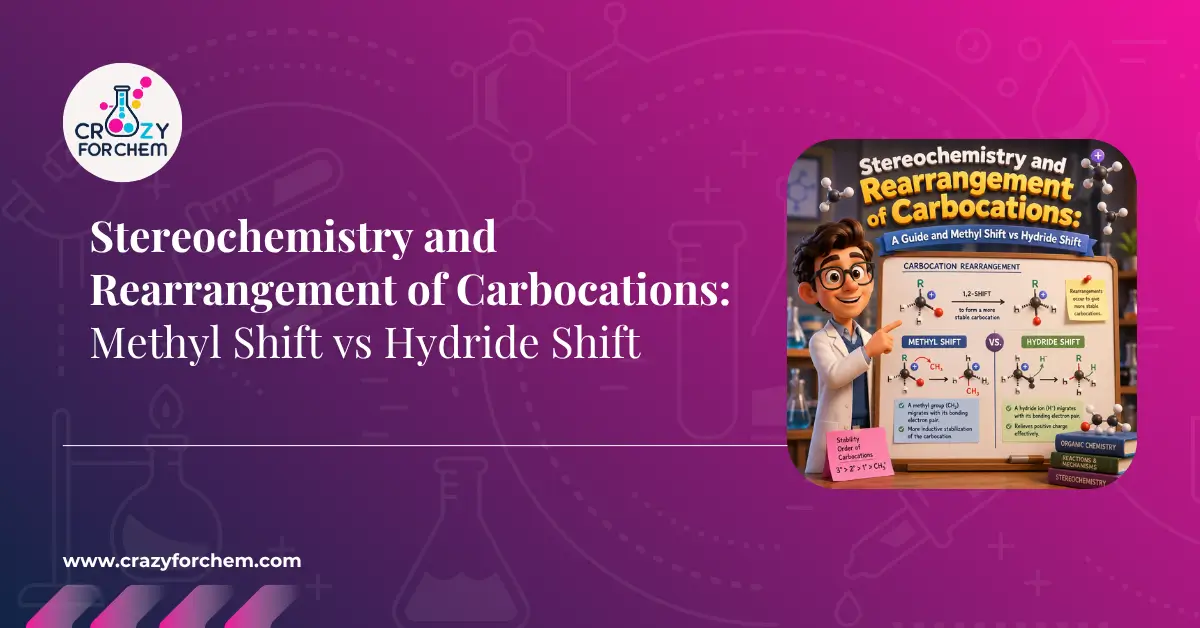
Master the stereochemistry and rearrangement of carbocations. Learn why methyl shift vs hydride shift occurs and how to predict major organic products.
Carbenes and Nitrenes: Spin States, Reactions & Complete JEE/NEET Exam Guide
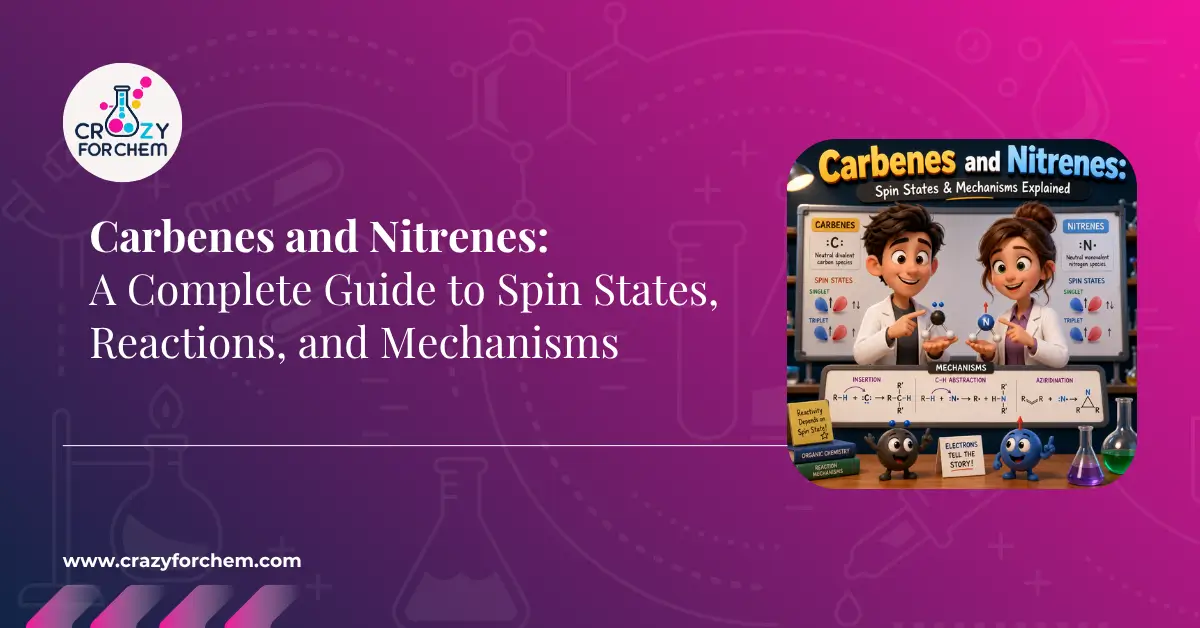
Learn carbenes and nitrenes singlet vs triplet states, cyclopropanation, C-H insertion, and named reactions: Curtius, Wolff & Beckmann explained.
Carbanions and Free Radicals: Formation, Stability Order & Complete JEE/NEET Guide
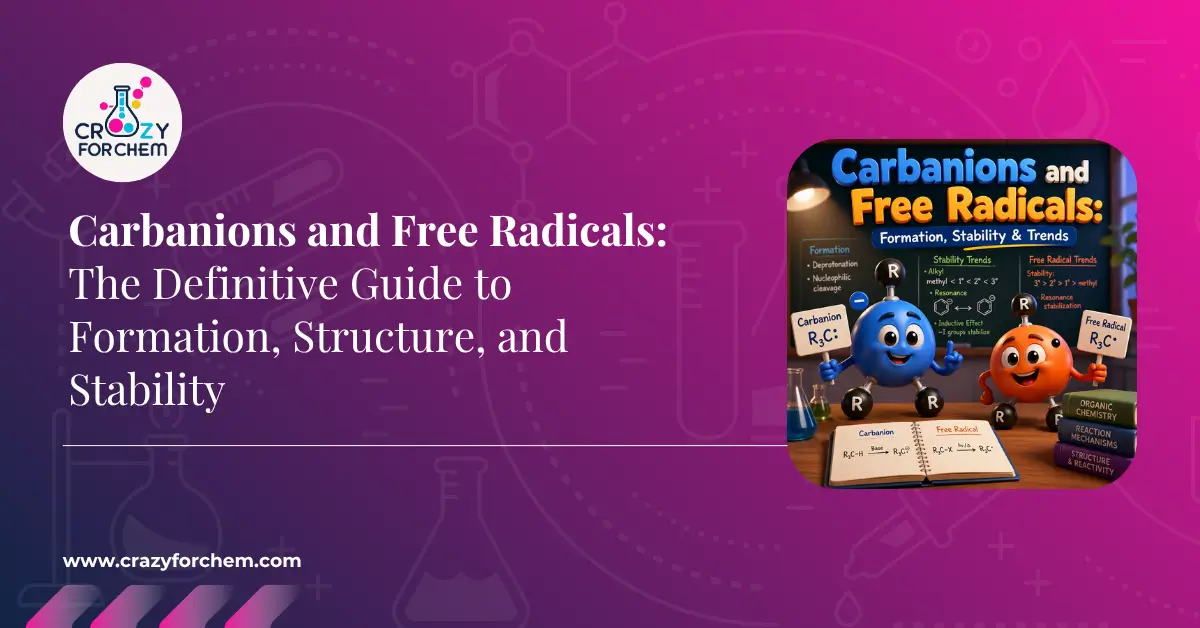
Carbanions and free radicals explained for JEE & NEET Class 11: stability order, sp²/sp³ geometry, homolytic vs heterolytic fission, s-character & solved MCQs
Carbocation Stability Order: The Definitive Guide to Reaction Intermediates
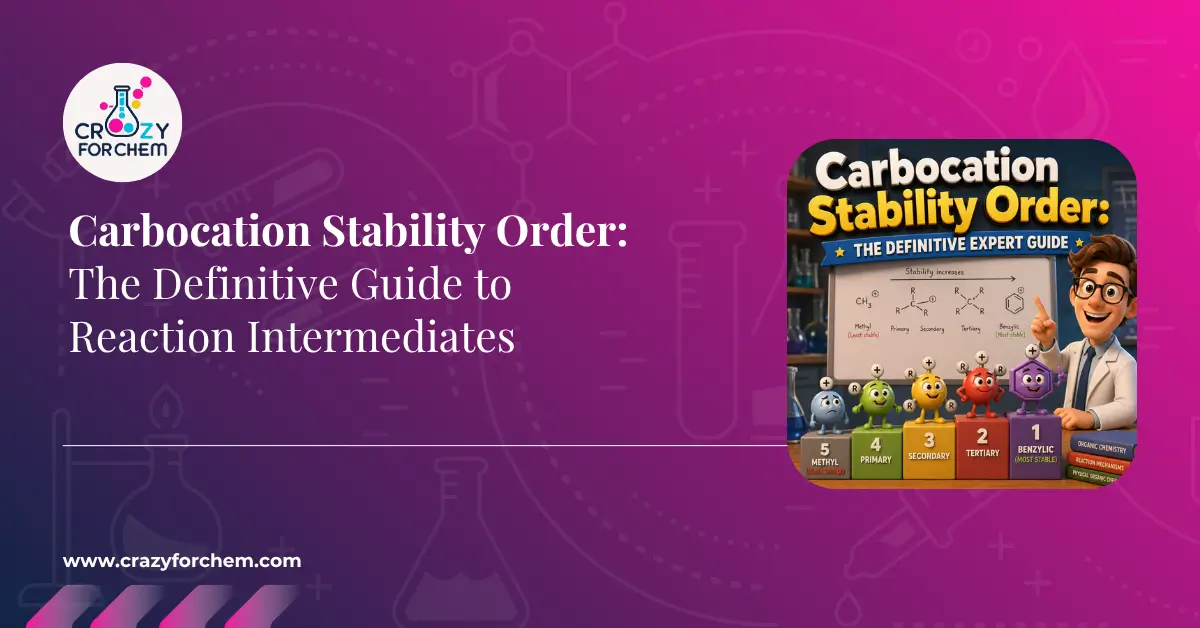
Master the carbocation stability order using hyperconjugation, resonance, and induction. Predict 3D reaction intermediate shifts for JEE and NEET easily.
Aromaticity and Hückel’s Rule: A Complete Guide with Examples
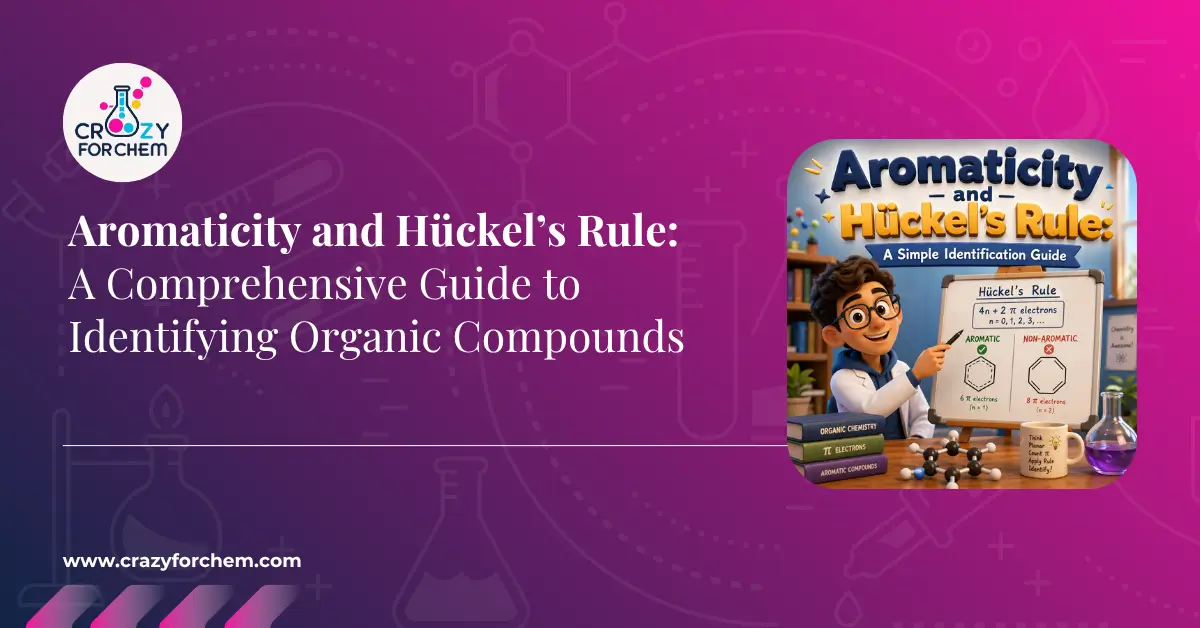
Learn Aromaticity and Hückel’s Rule with 4 clear criteria, the 4n+2 formula explained, and step-by-step examples of aromatic, anti-aromatic, and non-aromatic compounds.
Structural Isomerism in Organic Chemistry: Types, Examples, and Identification Tricks
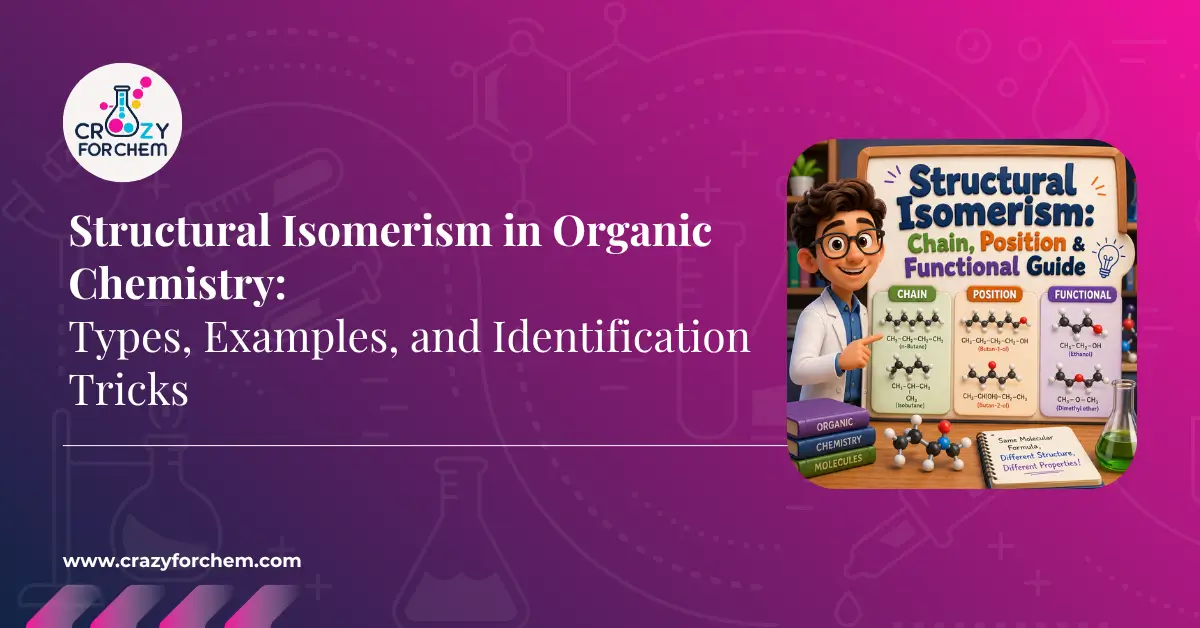
Master structural isomerism in organic chemistry. Learn to identify chain, position, functional, and metamerism isomers with clear examples and expert tips.
Hybridisation of Carbon: A Comprehensive Guide to sp, sp², and sp³ States
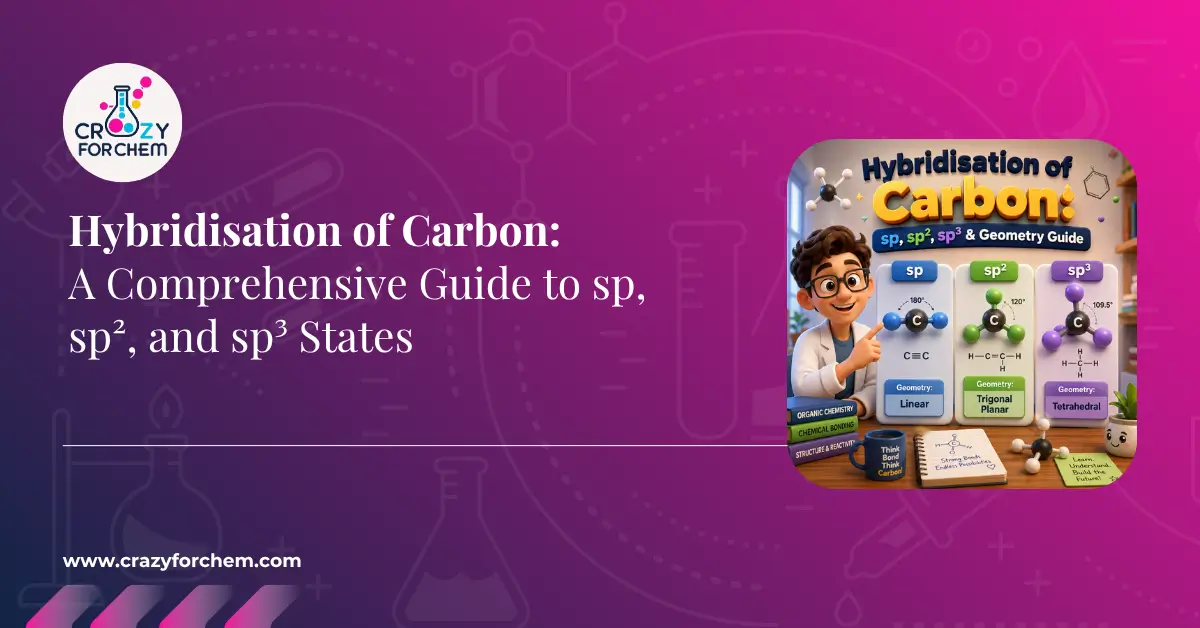
Explore the hybridisation of carbon (sp, sp², sp³). Understand molecular geometry, bond angles, and key tips for JEE/NEET. Expert guide with examples.
Inductive vs Mesomeric Effect: The Ultimate Hierarchy Guide
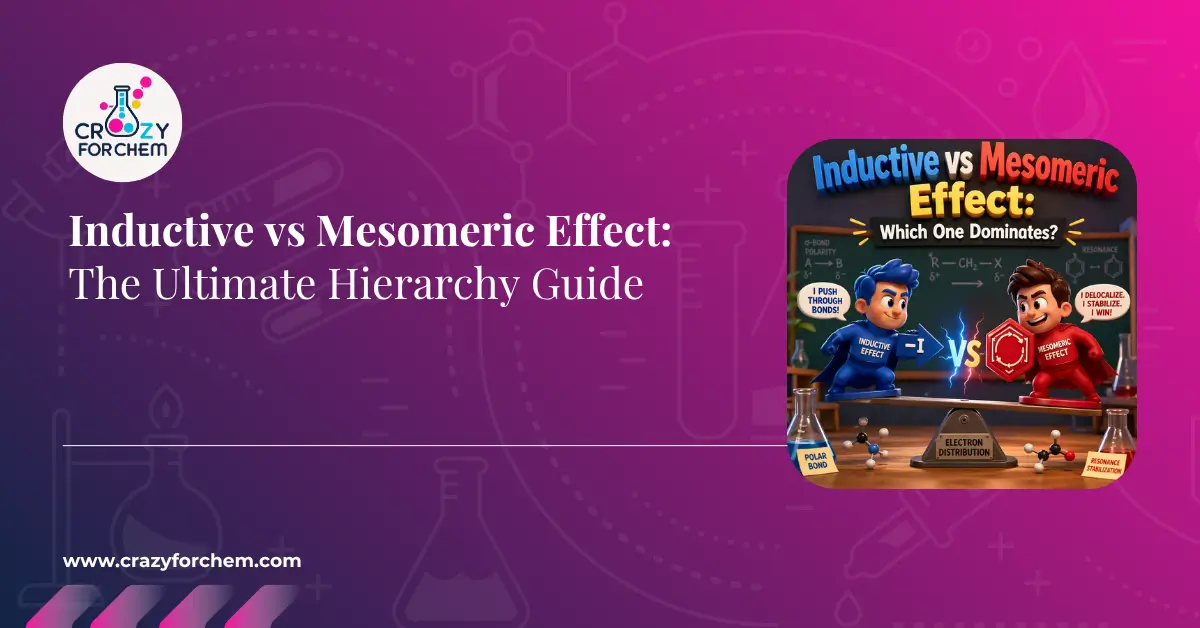
Comparing Inductive vs Mesomeric effect? Learn how these electronic displacement effects influence stability and reactivity in organic chemistry mechanisms.
Electromeric Effect in Organic Chemistry: A Guide to Temporary Polarisation
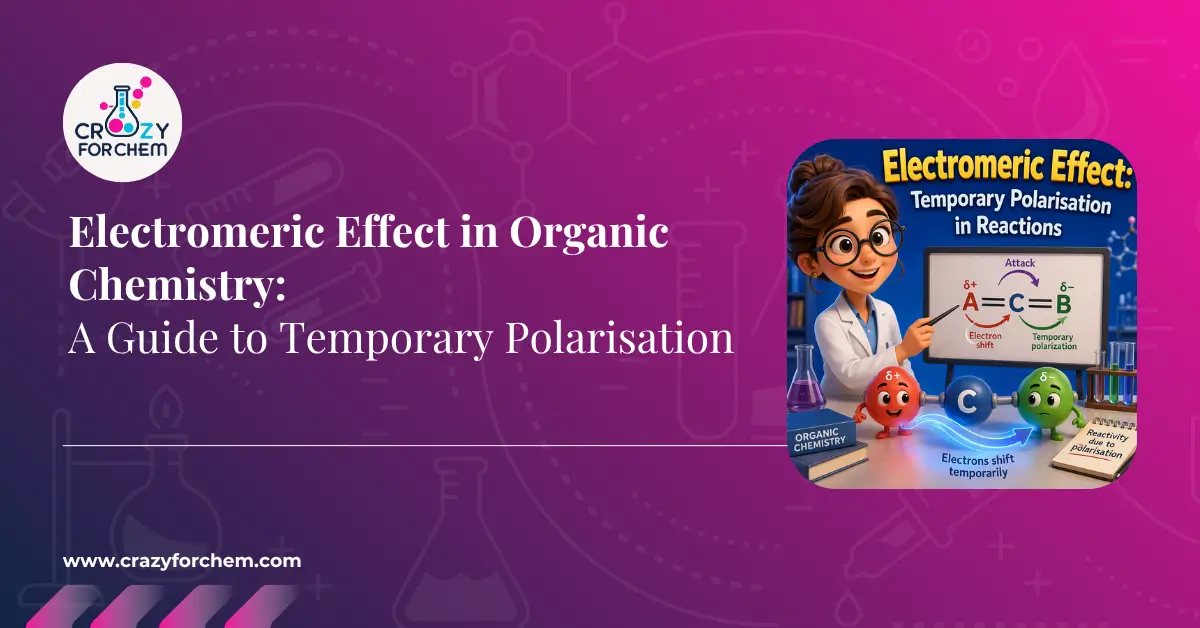
Master the electromeric effect (E-effect). Understand temporary polarisation, complete pi-electron transfer, and the key differences between +E and -E effects.
Hyperconjugation in Organic Chemistry: Understanding “No-Bond Resonance” Phenomenon
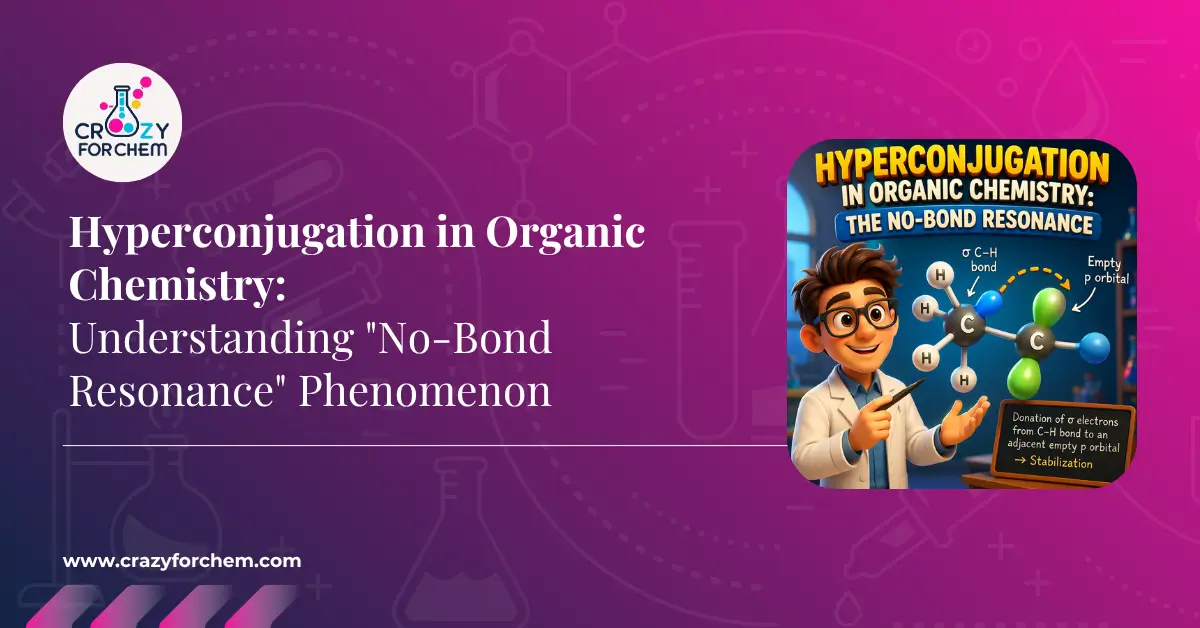
Learn Hyperconjugation in Organic Chemistry. Explore the Baker-Nathan effect, alpha hydrogen rules, and how no-bond resonance stabilises alkenes and carbocations.