

“As a chemist, I don’t just see food as ingredients; I see a complex matrix of biological and chemical compounds that are the foundation of our health.”
In an era where “greed-driven science” is sometimes used to deceive the consumer, the kitchen has become a primary battlefield.
Food is a basic requirement for life, yet food adulteration, the deliberate lowering of quality through the addition of inferior substances or removal of vital elements, is a rampant social evil in many parts of the world.
From milk diluted with detergent to turmeric laced with carcinogenic dyes, everyday staples can carry hidden risks that lead to severe long-term illnesses such as cancer, organ dysfunction, and malnutrition.
Fortunately, you do not need a sophisticated laboratory to protect your family; mastering kitchen chemistry through FSSAI DART tests can expose the most common frauds.
Knowing how to check food adulteration at home is your first line of defence in ensuring that what you consume is truly safe and nutritious.
“At-a-Glance Guide: To check milk purity, use the ‘Slanting Surface Test’ for water or the ‘Iodine Test’ for starch. For turmeric, the ‘Water Test’ detects lead chromate if the water turns orange-red instantly. These FSSAI-approved food adulteration tests at home use simple household reagents like water, iodine, and magnets.”
Table of Contents
The Science of “DART”: A Consumer’s Shield
The Food Safety and Standards Authority of India (FSSAI) has formalised this domestic science through the Detect Adulteration with Rapid Test (DART) framework.
These food adulteration tests at home are designed to be fast, low-cost, and visually clear, using items already found in a standard cupboard.
To prepare your own testing kit, you generally only require:
- Clear glass vessels and room-temperature water.
- A simple magnet (for detecting iron filings).
- Tincture of Iodine (available at pharmacies for ₹20–100).
- A lactometer (a small float used to check milk purity for ₹30–80).
- Red litmus paper (for detecting alkaline substances like urea).
1. The Dairy Deep Dive: How to Check Milk Purity
Milk is a nutrient-rich liquid essential for newborns and adults alike, but it is also one of the most frequently compromised items.
It is often diluted to increase profit margins or chemically altered to mimic the consistency of whole milk.
The Slanting Surface Test (Water Adulteration)
The simplest way to detect added water is to put a drop of milk on a polished, slanting surface.
Pure milk either stays in place or flows slowly, leaving a distinct, opaque white trail behind. Milk that has been diluted with water will flow immediately without leaving any mark or trail.
The Shake Test (Detergent Detection)
Dishonest vendors may add detergents to milk to increase the foaming property or adjust the thickness of diluted batches.
Take 5–10 ml of the milk sample with an equal amount of water and shake it vigorously in a bottle. Pure milk will form only a very thin, fleeting layer of foam caused by agitation.
However, milk adulterated with detergent will form a persistent, dense lather or froth that does not disappear quickly.
The Iodine Test (Starch Detection)
Starch from sources like flour, potato, or rice is added to increase the solid-not-fat (SNF) content of milk.
To test for this, boil 2-3 ml of the sample with 5 ml of water (boiling is only strictly necessary for solid milk products like khoya or paneer), allow it to cool, and add 2–3 drops of tincture of iodine.
If the mixture remains yellowish, it is pure; if it turns a distinct blue, starch is present.
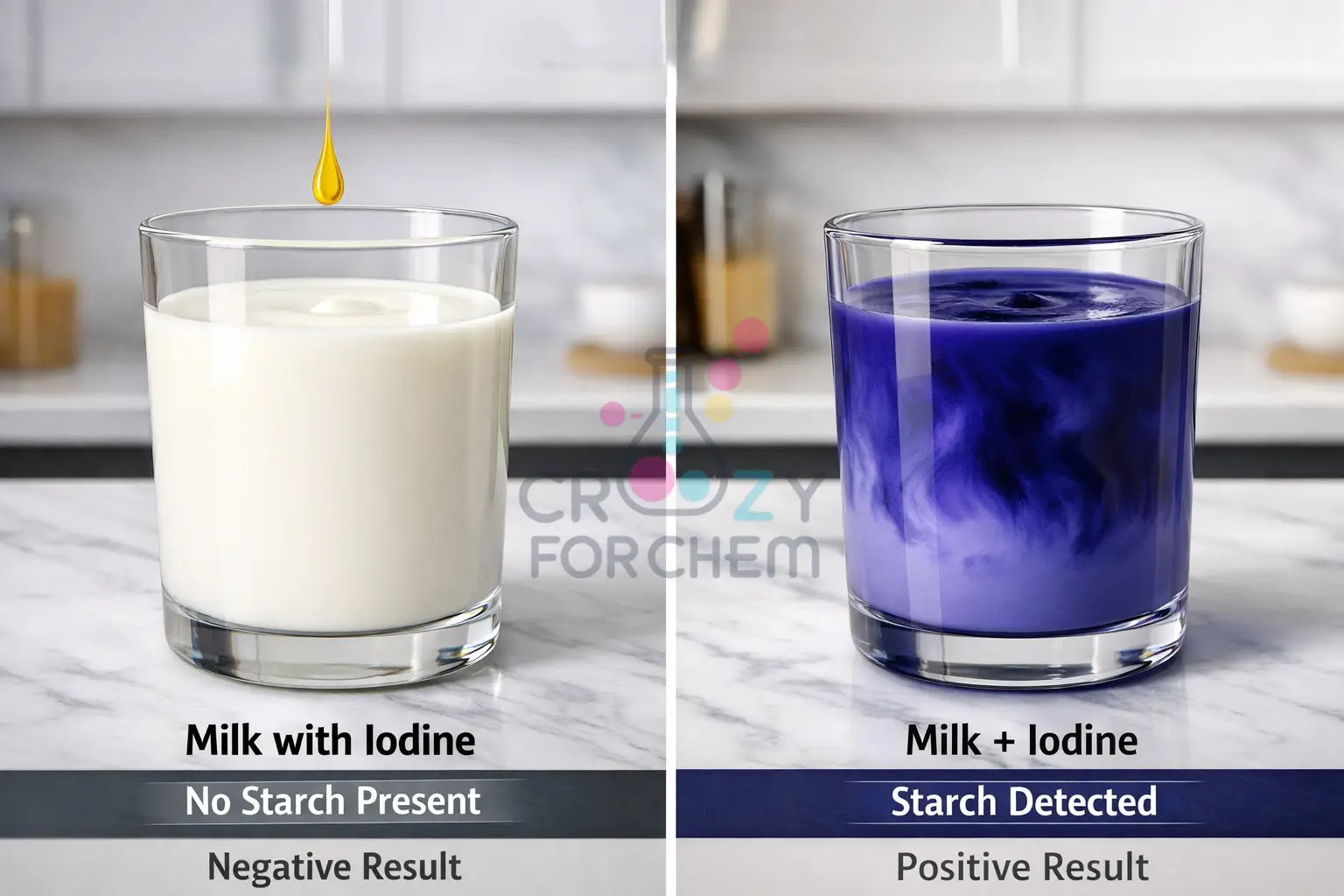
The Molecular Change: During this reaction, the iodine molecules get “trapped” within the helical structure of the amylose (a component of starch). This forms a starch-iodine complex that absorbs specific wavelengths of light, resulting in the characteristic dark blue or purple-black colour.
The Litmus Test (Urea Detection)
Synthetic milk is sometimes created by mixing urea, caustic soda, and vegetable oil. To detect urea, add half a teaspoon of soybean or arhar (pigeon pea) powder to 5 ml of milk.
Let it sit for 5 minutes, then dip a red litmus paper into the liquid. If the paper turns blue, it indicates an alkaline environment created by added urea. This change in indicator colour is similar to how we tested Onion pH in our first guide.
2. Spices and Condiments: Identifying Toxic Additives
Spices are frequently bulked up with non-food fillers or brightened with hazardous dyes. Detect spice adulteration early to avoid the gradual build-up of heavy metals in your system.
Turmeric and Lead Chromate
This is perhaps the most critical test for an Indian household. Lead chromate is a toxic chemical used to give turmeric a bright yellow hue.
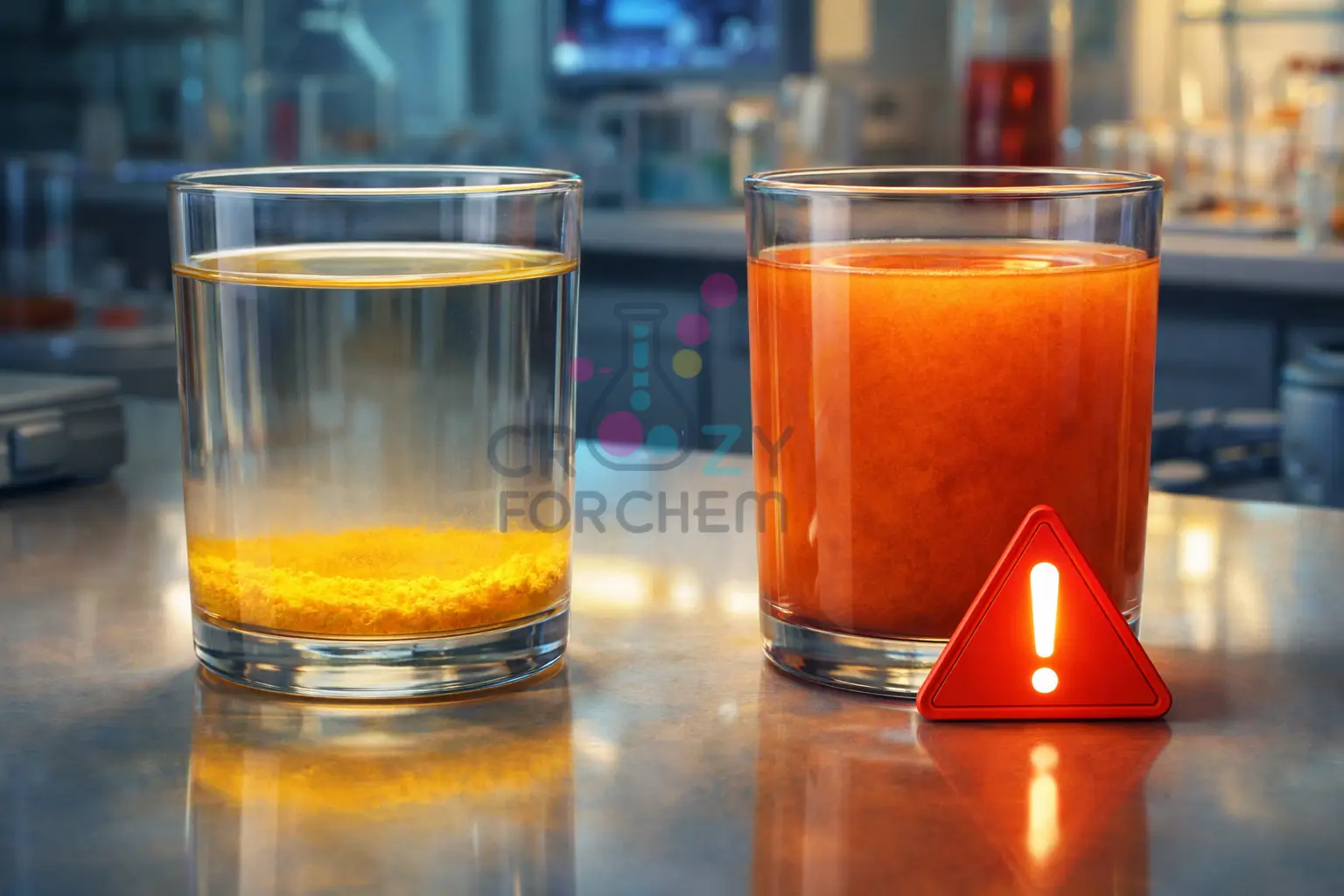
- The Water Test: Add a teaspoon of turmeric powder to a glass of warm water without stirring. Pure turmeric will settle slowly at the bottom, leaving the water clear or very lightly yellowed. If the water turns a bright orange-red instantly, the sample is likely contaminated with lead chromate.
Chilli Powder and Artificial Colour
Sprinkle a small amount of chilli powder on the surface of a glass of water. Pure chilli powder will stay on the surface for some time before gradually settling to the bottom without leaving any streaks.
Adulterated chilli powder containing water-soluble synthetic dyes will immediately release bright red streaks that descend into the water.
Black Pepper and Papaya Seeds
Papaya seeds are commonly mixed with black pepper berries because they are phenotypically similar.
- The Float Test: Drop the pepper berries into a glass of water. Pure black pepper berries are dense and will sink to the bottom. Papaya seeds are lighter and have a shrunken, smooth surface; they will float on the surface of the water.
- The Squeeze Test: Lightly press the berries with your fingers; light black berries of real pepper will break easily, but papaya seeds are often more resilient.
Asafoetida (Hing) and Resins
Pure Hing is a resin that should burn cleanly.
- The Burn Test: Place a small piece of asafetida on a stainless steel spoon and light it with a match. Pure asafetida will burn brightly, similar to camphor. Adulterated asafetida, which often contains soapstone or foreign resins, will not produce a bright flame and may leave a heavy residue.
3. Grains, Pulses, and Staples: Spotting the Fillers
Rice and Plastic Grains
Some unscrupulous vendors mix plastic grains with real rice to increase quantity. To test this, put a spoonful of rice into a glass of water and stir.
Real rice will sink to the bottom due to its density. Plastic grains, being less dense, will float to the surface.
Pulses and Metanil Yellow
Metanil yellow is a non-permitted, carcinogenic food colour used to make pulses (like arhar dal) look brighter and more appealing.
- The Rubbing Test: Take a handful of dal and rub it vigorously between your palms for 30 seconds. If your palms turn yellow, the dal has an artificial colour coating.
- The Acid Test: If you have access to dilute Hydrochloric acid, add a few drops to a dal-and-water mixture. The development of a pink colour indicates the presence of Metanil yellow.
Wheat Flour and Chalk Powder
Wheat flour (Atta) is often bulked with chalk powder (calcium carbonate). Stir a spoonful of flour into a glass of water.
Pure flour will settle with minimal residue, but chalk will settle distinctly at the bottom and make the water appear unnaturally cloudy.
4. Sweets and Oils: Solubility and Solidification
Honey Purity
Knowing how to check food adulteration at home for honey is essential because over 77% of brands have been found to contain sugar syrups in recent studies.
- The Water Glass Test: Drop one teaspoon of honey into a glass of water without stirring. Pure honey is dense and will sink as a distinct lump, maintaining its shape at the bottom for several minutes. Adulterated honey (mixed with sugar syrup) will dissolve immediately and spread through the water as it descends.
- The Cotton Wick Test: Dip a cotton wick in honey and light it. Pure honey will burn steadily. If the honey contains water or syrup, it will either fail to light or produce a distinctive cracking sound.
Coconut and Mustard Oils
- Coconut Oil: Place a sample of coconut oil in the refrigerator for 30 minutes (do not use the freezer). Pure coconut oil will solidify completely into a white solid mass. Any other oils added as adulterants will remain as a separate liquid layer on top.
- Mustard Oil: Put mustard oil in the freezer for 10 minutes. Pure mustard oil stays liquid or gets slightly cloudy, but if it turns into a solid block, it is likely contaminated with palm oil.
5. Fresh Produce: Wax and Dyes
The Green Vegetable Test
Malachite green is a toxic dye used to make spinach, green chillies, and peas look fresher.
Soak a cotton ball in water or vegetable oil and rub it on the surface of the vegetable. If the cotton turns green, artificial dyes are present.
Apples and Wax Polishing
Apples are often coated with synthetic waxes to enhance their appearance and shelf life.
Take a clean blade and gently scratch the surface of the apple. If a white, flaky substance comes off, it is a sign of wax polishing.

Data-Rich Summary: Quick Reference Table
The following table provides a quick guide for food adulteration tests at home based on standard FSSAI methodologies.
| Food Item | Adulterant | Test Method | Positive Result (Adulterated) |
|---|---|---|---|
| Milk | Water | Slanting Plate | Flows fast, no white trail |
| Milk | Detergent | Vigorous Shake | Dense, stable lather |
| Turmeric | Lead Chromate | Warm Water | Instant orange-red colour |
| Chilli | Brick Dust | Rub Residue | Gritty feel on fingers |
| Honey | Sugar Syrup | Water Drop | Disperses in water instead of sinking |
| Coconut Oil | Other Oils | Refrigeration | Remains liquid or forms layers |
Health Hazards: The Hidden Toll of Adulteration
“The hazardous chemicals found in adulterated food can damage our health just as severely as the toxic gases released when mixing bleach and ammonia.”
Food adulteration is more than just a financial scam; it is a serious health threat.
- Carcinogens: Dyes such as metanil yellow and Lead chromate are known to be carcinogenic with long-term exposure.
“The Lead Chromate often found in turmeric has a devastating impact on the body, acting through pathways that are entirely different and far more dangerous than the controlled Chemistry of painkillers we use for relief.”
- Toxicity: Lead chromate can cause lead poisoning, anaemia, and multi-organ tissue injury.
- Paralysis: The consumption of Khesari dal in Toor dal over long periods can result in lathyrism, a form of neurological paralysis.
- Organ Failure: Adulterants like Argemone oil in mustard oil can lead to epidemic dropsy, glaucoma, or cardiac arrest.
Conclusion: Empowerment Through Information
“Consumer Awareness” is the primary step to eradicating food fraud.
By performing these simple chemical tests and strictly purchasing products with the FSSAI mark, BIS certification, or AGMARK seal, you can ensure your kitchen remains a sanctuary for health.
If you discover adulterated food, stop consuming it immediately.
You should photograph the evidence, preserve your purchase bills, and file an official complaint via the FSSAI ‘Food Safety Connect’ portal or call their toll-free number at 1800-11-2100.
Your vigilance not only protects your family but also helps the authorities curb this social evil for the entire community.
Frequently Asked Questions
-
How can I test if my milk has been diluted with water at home?
The most effective way to detect added water is the “Slip Test”. Place a single drop of milk on a polished, slanted surface (like a stainless steel plate). Pure milk will flow slowly and leave a distinct white trail behind. Adulterated milk flows immediately without leaving a mark, as the surface tension and density are altered by the excess water.
-
Is Metanil Yellow in turmeric dangerous?
Yes, Metanil Yellow is a non-permitted food colour that is highly carcinogenic. Long-term consumption can lead to severe stomach distress and organ damage. You can detect it by adding a few drops of a strong acid (like concentrated lemon juice or dilute HCl) to a turmeric-water mixture; if the yellow turns a bright, stable pink, the spice is adulterated with this synthetic dye.
-
Does boiling milk remove chemical adulterants?
No. While boiling is effective for killing harmful bacteria (pasteurisation), it cannot remove chemical contaminants such as detergents, urea, or lead-based dyes. In some cases, boiling may even concentrate these chemicals as the water evaporates. Chemical testing, like the Iodine Test, is the only way to confirm their presence.
-
Why is Tincture of Iodine used in so many food purity tests?
Tincture of Iodine is a highly sensitive chemical indicator for starch. Since starch is a cheap and common bulking agent used in milk, honey, and spices, the “Molecular Change” in the starch-iodine reaction—where iodine molecules get trapped in the starch’s helical structure—makes it an invaluable tool for home detection.
-
How can I tell if my coffee powder is pure?
A simple “Float Test” can identify common fillers. Gently sprinkle coffee powder on the surface of a glass of water. Pure coffee contains natural oils that allow it to float for several minutes. Common adulterants like chicory or clay are denser and will sink almost immediately, often leaving a brown trail of artificial colour in the water.
-
What is considered the most dangerous common food adulterant?
Lead Chromate in turmeric is among the most hazardous. Lead is a cumulative toxin that the body cannot easily expel. It specifically targets the central nervous system and can lead to lead poisoning, multi-organ failure, and developmental issues in children. Identifying this toxin via the Water Test is a critical safety step for every household.
-
Can I use the same indicators I use for medicines to test food?
While the basic principles of Chemistry of painkillers and food testing both rely on molecular reactions, food tests are specifically designed to detect industrial contaminants. However, both fields utilise similar indicators, such as litmus paper, to detect changes in pH or chemical composition.