
“As a chemist, I don’t see food; I see a matrix of additives.”
Walking into a modern supermarket often feels like entering a marketing minefield.
While the front of a pack is designed to attract you with buzzwords like “all-natural,” “100% pure,” or “high protein,” the back of the pack is where the scientific reality lives.
In a global market flooded with ultra-processed options, the ability to read food labels is no longer just a health enthusiast’s hobby; it is a critical consumer safety tool for navigating a world of complex chemical formulations.
The Food Safety and Standards Authority of India (FSSAI), alongside global bodies such as the FDA, plays a vital role in this matrix by setting standards for transparency, ensuring that what reaches your plate is legally registered and safe for consumption.
However, a licence ensures legality, not necessarily “purity” or health. This comprehensive guide will teach you to look past the marketing “smokescreen” and understand FSSAI labels through the lens of chemistry.
Table of Contents
1. The Chemistry of the Ingredient List: Order Matters
The most honest part of any packaging is the ingredient list. If you want to effectively read food labels, you must understand the “Descending Weight Rule”.
- The Descending Weight Rule: By law, ingredients must be listed in order of their weight in the product. This means the first three ingredients are what you are primarily consuming. If sugar, refined flour (maida), or cheap vegetable oils appear in these top slots, the product is likely a “sugar bomb” or a highly processed item designed for profit rather than nutrition.
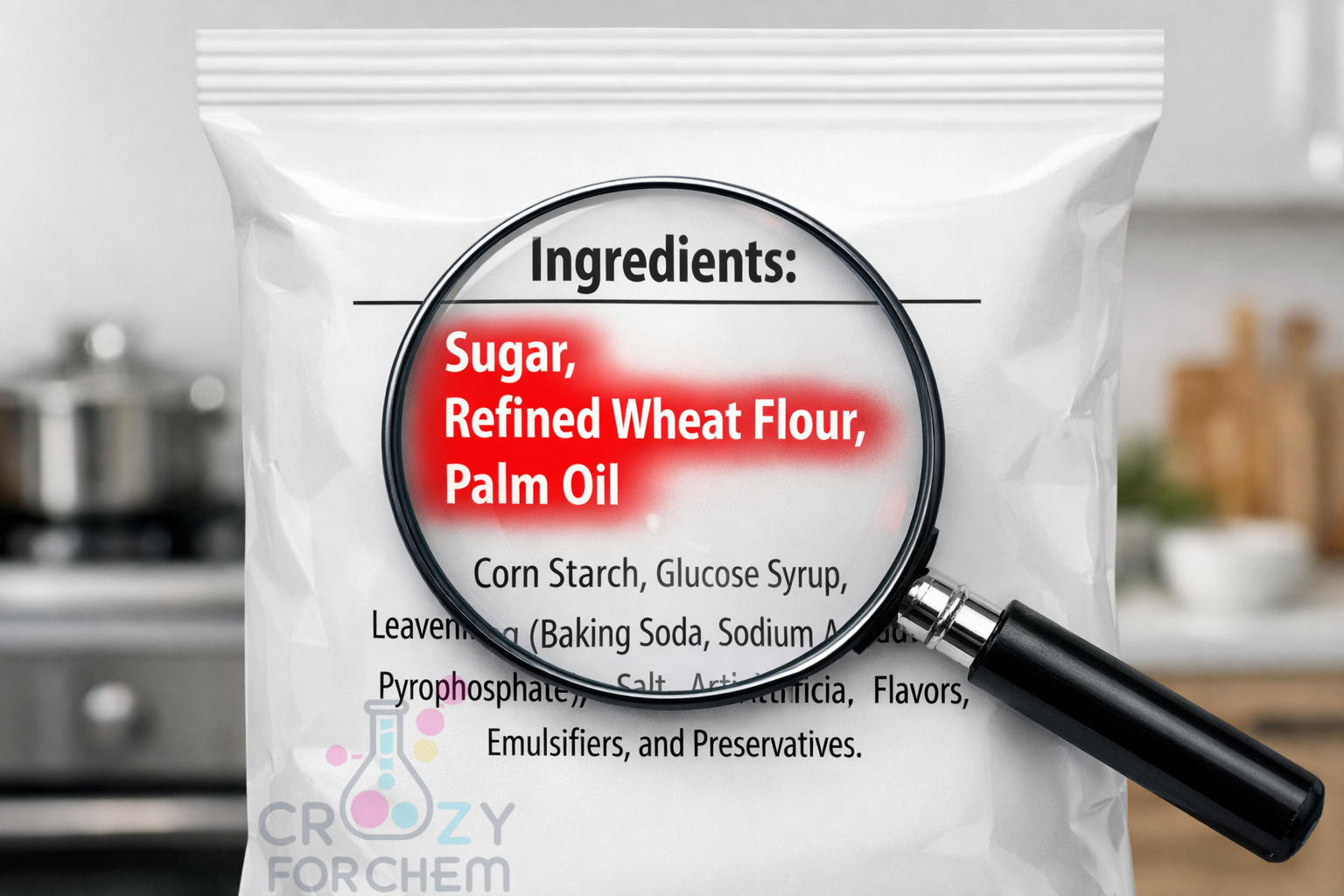
- Recognising Ultra-Processed Food (UPF) Markers: A “chemistry sheet” label featuring long, unrecognisable, or unpronounceable names is a red flag. UPFs are often hyper-palatable, designed to be addictive, and frequently lack essential vitamins and fibre. Generally, a shorter ingredient list indicates a product closer to “real” food.
2. Decoding Hidden Sugars: The “Sneaky” Names
One of the most complex tasks when you read food labels is identifying hidden sugar names. Manufacturers often use multiple forms of sugar to artificially lower the position of “sugar” on the ingredient list.
If sugar shows up under different names throughout the list, it indicates a high total sugar load that can cause rapid blood sugar spikes.
The Total Sugars vs. Added Sugars Distinction
Modern labels often distinguish between “Total Sugars” and “Added Sugars”.
- Total Sugars: Includes sugars naturally present in nutritious foods, such as lactose in milk and fructose in whole fruits.
- Added Sugars: These are added during processing (e.g., sucrose or dextrose), packaged as sweeteners (table sugar), or derived from syrups and concentrated juices. The FDA recommends limiting these to less than 10% of total daily calories, roughly 50 grams for a 2,000-calorie diet.
The Maltodextrin Trap
One of the most common and misleading hidden sugar names is Maltodextrin. A polysaccharide derived from the enzymatic hydrolysis of starch, it is used as a thickener, filler, and texturizer.
Despite being classified as a complex carbohydrate, it has a high Glycemic Index (GI) that is comparable to or even exceeds that of glucose.
This leads to rapid metabolic disruption but allows the product to often escape being labelled as “sugar” in the consumer’s mind.
Table 1: Common Hidden Sugars and Industrial Sweeteners
| Often 80%+ sugar; lacks fibre and vitamins | Names to Spot on Labels | Impact |
|---|---|---|
| Syrups | High-fructose corn syrup (HFCS), Invert syrup, Agave nectar, Rice syrup | High GI; often used in sauces |
| Industrial Sugars | Dextrose, Fructose, Maltodextrin, Maltose, Sucrose | Rapid blood sugar spikes |
| “Healthy” Disguises | Honey, Jaggery, Coconut sugar, Date paste | Still sugars; consume in moderation |
| Fruit-Based | Fruit juice concentrate, fruit puree | Often 80%+ sugar; lack fiber and vitamins |
3. The Science of Preservatives: Extending Shelf Life
While the Chemistry of Indian spices provides natural protection, industrial food additives and preservatives are essential for protecting against microbial growth and temperature changes, but their overuse increases the “chemical load” of our diet. Understanding the chemistry behind these agents helps us evaluate their necessity.
The pKa Factor: Activating the Preservation
Common preservatives like Sodium Benzoate and Potassium Sorbate are added as salts because they are highly soluble in water. However, they are inactive in salt form.
To work, they must convert into their active acid forms (Benzoic Acid or Sorbic Acid). This conversion is dictated by the pKa (Acid Dissociation Constant) and the pH of the food.
- Benzoic Acid (pKa ~4.2): Most effective in high-acid products like fruit juices and soft drinks.
- Sorbic Acid (pKa ~4.76): A generalist that is exceptionally effective against yeasts and moulds in slightly higher pH foods like bakery products and dairy.
Expert Insight: “As a chemistry educator, I always advise checking soft drink labels for this specific combo. Benzene formation is a classic example of unintended chemical reactions in our food matrix.”
Mechanism of Action: Metabolic Disruption
Active preservative molecules are often lipophilic (fat-loving), allowing them to pass through the microbial cell membrane.
Once inside the neutral environment of the microbe, the acid dissociates, acidifying the cell interior. The microbe must then consume its energy (ATP) to pump protons back out, eventually leading to cell death.
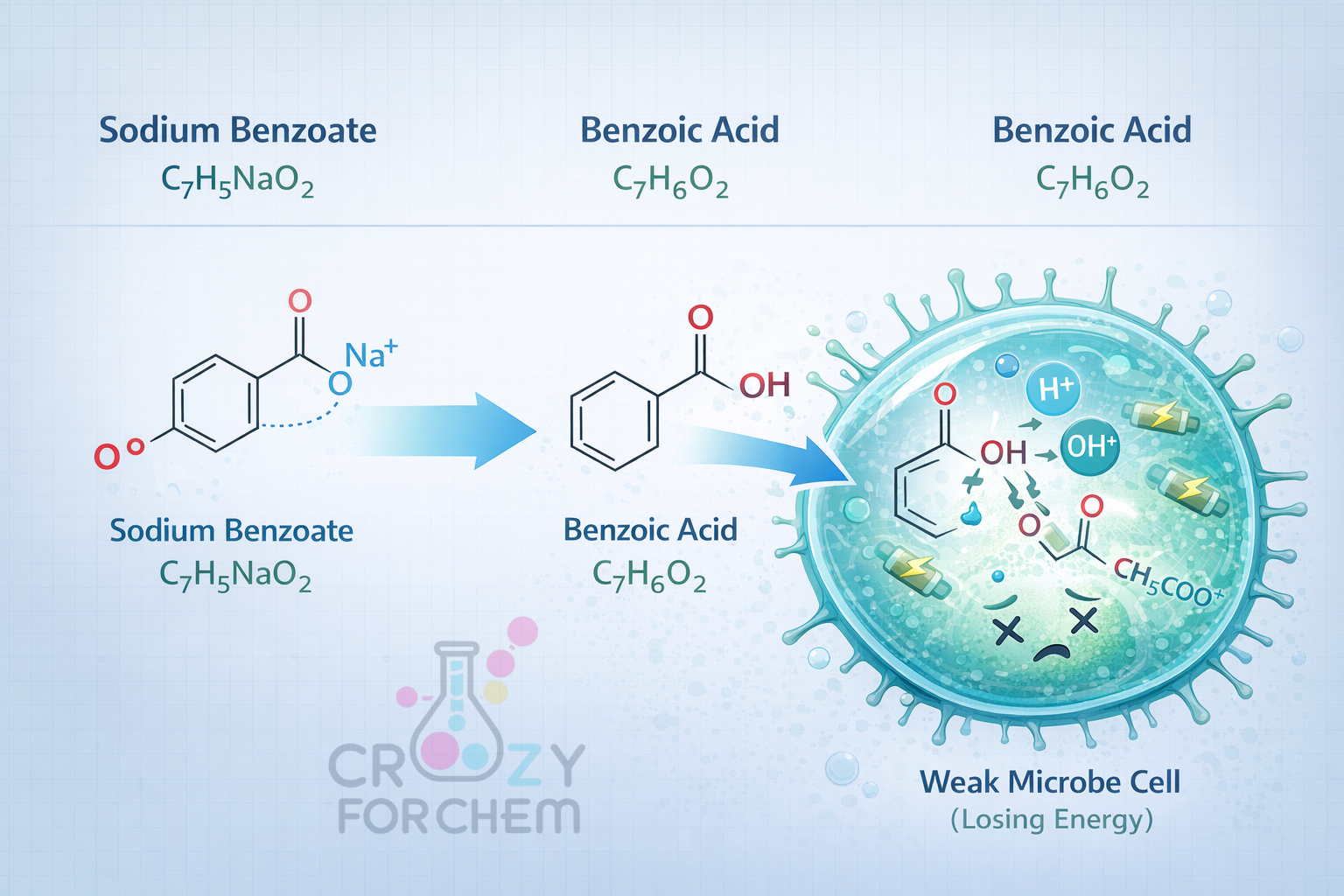
Table 2: Common E-Numbers Decoded
| E-Number / INS Code | Chemical Name | Primary Function |
|---|---|---|
| E211 | Sodium Benzoate | Antimicrobial agent; prevents bacterial development |
| E202 | Potassium Sorbate | Antifungal agent; prevents yeast and mould growth |
| E330 | Citric Acid | Acidity regulator (Acidulant); can boost antioxidant activity |
| E415 | Xanthan Gum | Thickening agent; provides viscosity and body |
A critical technical risk when you read food labels involves the combination of Sodium Benzoate and Ascorbic Acid (Vitamin C).
In the presence of trace metals and heat or UV light, a chemical reaction can occur that forms Benzene, a known human carcinogen.
Manufacturers often use chelating agents like EDTA to prevent this, but savvy consumers often choose Potassium Sorbate alternatives for Vitamin C-rich beverages.
4. Stabilisers and Emulsifiers: The “Molecular Bridge”
Texture and consistency are governed by food additives and preservatives known as stabilisers and emulsifiers.
These are crucial for preventing ingredients like oil and water from separating in products like mayonnaise, salad dressings, and ice cream.
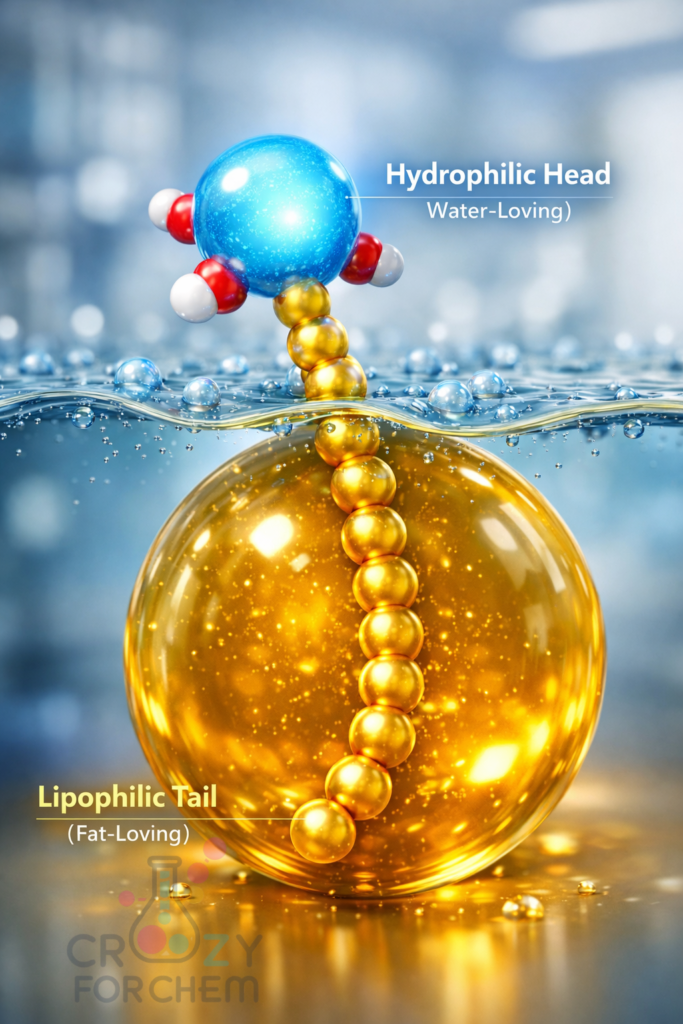
- The “Molecular Bridge”: Emulsifiers (such as Lecithin (E322) or Polysorbates) work because they possess unique molecular structures with both “Hydrophilic” (water-loving) and “Lipophilic” (fat-loving) ends. These molecules position themselves at the junction of oil and water, reducing surface tension and locking the emulsion in place. Similar to how the Maillard reaction creates complex flavours in browned foods, these molecular bridges define the texture of our meals.
- Specific Roles: Stabilisers such as Carrageenan (E407) or Guar Gum (E412) bind water molecules and increase viscosity, providing a smooth mouthfeel and preventing ice crystals from forming in dairy desserts.
5. Health Claims vs. Reality: Marketing “Smokescreens”
Brands often use big, bold claims on the front of packaging while hiding the real story on the back. To truly understand FSSAI labels, you must investigate these claims scientifically.
- “No Added Sugar”: This is a common trick. It only means no sucrose or syrups were added during processing. The product can still be a “sugar bomb” due to natural fruit concentrates (which are mostly sugar) or contain sugar alcohols like sorbitol or xylitol.
- “Sugar-Free”: This may mean the product contains hidden natural sugars or artificial sweeteners like aspartame or sucralose. While zero-calorie, some studies suggest high intake of artificial sweeteners can disrupt the gut microbiome.
- “Low Fat”: Often, when fat is removed, manufacturers add high amounts of sugar or salt to compensate for the lost flavour and texture.
- “High Protein”: To be a meaningful source, a product should ideally contain at least 20g of protein per 100g. Many “protein bars” actually contain more sugar than protein.
- The Serving Size Trick: Nutritional values are usually displayed “per serving,” but a small packet may contain multiple servings. If you eat the whole packet, you must multiply the calorie and sugar counts by the number of servings to see the true impact on your body.
6. Safety Concerns and Red Flag Additives
While many additives are considered “Generally Recognised as Safe” (GRAS), excessive intake or individual sensitivities can pose health risks.
- Sulphites (E220-228): Used as antibacterial agents, these can trigger severe hypersensitivity reactions and pulmonary irritation in asthmatic consumers.
- Artificial Colours: Specific additives like Tartrazine (E102) and Sunset Yellow (E110) have been linked to hyperactivity and behavioural issues in children.
- BHA/BHT (E320/E321): Synthetic antioxidants used to prevent fats from going rancid; some scientific reports have linked them to potential carcinogenic effects or skin conditions like urticaria.
- Nitrates and Nitrites: Commonly found in cured meats to prevent Clostridium botulinum, these can react with amines to produce N-nitrosamines, which are potentially mutagenic and carcinogenic.
7. Conclusion: Empowerment Through Knowledge
Chemistry is not just a subject for the laboratory; it is present in every packet in your shopping cart.
By spending just 30 seconds to read food labels effectively, you move from being a target of clever marketing to an informed, safety-conscious consumer.
Remember the core principles: look for the FSSAI 14-digit licence to ensure legality, check the first three ingredients for quality, and be wary of long lists of unrecognisable food additives and preservatives.
Choosing whole, minimally processed foods remains the most effective strategy for health, but when you do buy packaged goods, let the label be your scientific guide.
Frequently Asked Questions
-
How do you identify hidden sugars on a food label?
To identify hidden sugars, look for ingredients ending in the suffix “-ose”, such as sucrose, fructose, dextrose, and maltose. Additionally, check for various syrups (high-fructose corn syrup, agave nectar, rice syrup) and industrial carbohydrates like maltodextrin. Manufacturers often list multiple types of sugar to prevent “sugar” from appearing as the primary ingredient.
-
What is the “Descending Weight Rule” on food labels?
The Descending Weight Rule is a legal requirement stating that ingredients must be listed in order of their weight in the product. This means the first three ingredients on a label constitute the bulk of what you are consuming. If refined flour (maida), sugar, or vegetable oils appear in the top three, the product is highly processed.
-
Is Maltodextrin worse than table sugar?
In terms of its Glycemic Index (GI), maltodextrin can be worse than table sugar. While table sugar (sucrose) has a GI of around 65, maltodextrin ranges between 85 and 105. This causes a more rapid spike in blood glucose levels, even though maltodextrin is technically classified as a complex carbohydrate on many food labels.
-
What do E-numbers on a food label mean?
E-numbers (or INS codes in India) are codes for food additives that have been assessed for safety by regulatory bodies like the European Food Safety Authority. They include preservatives (E200-E299), antioxidants (E300-E399), and emulsifiers/stabilisers (E400-E499). Seeing an E-number indicates that a specific chemical has been added to improve shelf life, texture, or colour.
-
Q5. Why are emulsifiers like Lecithin added to food?
Emulsifiers, such as Soya Lecithin (E322), are added to prevent oil and water from separating. Chemically, these molecules act as a “molecular bridge” with a water-loving (hydrophilic) head and a fat-loving (lipophilic) tail. They are essential for maintaining a smooth, consistent texture in products like chocolate, mayonnaise, and ice cream.
-
What is the difference between “Total Sugars” and “Added Sugars”?
Total Sugars include all sugar molecules present in the food, including naturally occurring ones like lactose in milk or fructose in fruit. Added Sugars are those added during processing, such as cane sugar, honey, or syrups. Experts suggest limiting added sugars to less than 10% of your daily calorie intake to maintain metabolic health.
-
Can food preservatives be harmful?
While most preservatives are GRAS (Generally Recognised as Safe), some can cause sensitivities. For example, Sulphites (E220-E228) can trigger asthma symptoms in sensitive individuals, and Sodium Benzoate (E211) can potentially form benzene (a carcinogen) if combined with Vitamin C under specific conditions like high heat or UV light.