Most students encounter the pH scale for the first time in a laboratory, but the truth is that chemistry is happening all around us.
From the tartness of your morning orange juice to the precise balance of your blood, the pH scale in real life is a constant, invisible force that governs our health and our environment.
At its simplest, pH stands for the ‘Potential of Hydrogen’ (or ‘Power of Hydrogen’), and it provides a numerical value for how acidic or basic a water-based solution is.
The scale runs from 0 to 14, where 7 is considered neutral, the point where hydrogen ions (H⁺) and hydroxide ions (OH⁻) are in perfect balance.
Anything below 7 is acidic, meaning it has a higher concentration of hydrogen ions, while anything above 7 is basic (or alkaline), signifying a higher concentration of hydroxide ions.
Table of Contents
Understanding the Logarithmic Nature of pH
One of the most important things to understand about the pH scale in real life is that it is logarithmic. This means that each whole number change on the scale represents a tenfold (10x) difference in acidity.
For example, a substance with a pH of 4 is ten times more acidic than one with a pH of 5, and a staggering one hundred times more acidic than one with a pH of 6.
This is why even a seemingly small shift in the pH of our blood or the ocean can have catastrophic biological consequences.
The concept of pH was introduced by the Danish biochemist S.P.L. Sørensen in 1909 while he was working at the Carlsberg Laboratory.
Interestingly, Sørensen never explicitly explained why he used the letter ‘p’. Some believe it stands for the French puissance or German potenz, both meaning “power,” while others suggest it simply referred to the “potential” of the hydrogen electrode used in his measurements.
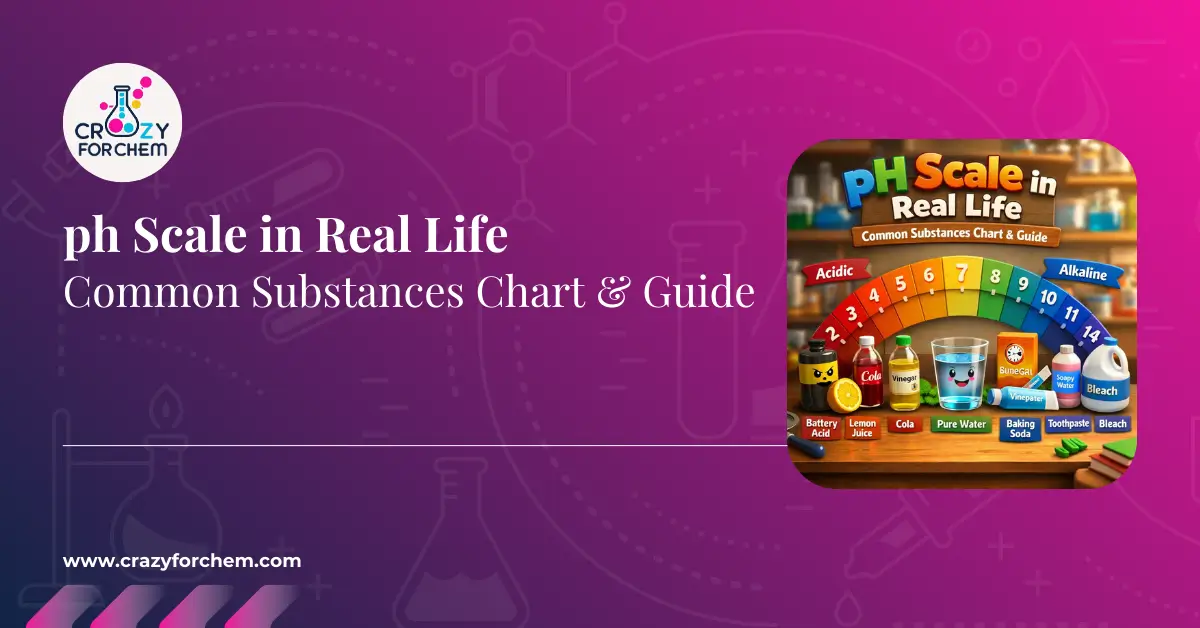
The pH Scale in Real Life: Common Substances Chart
To help you visualise where everyday items fall on this spectrum, refer to the following chart based on standard chemical measurements.
| Substance | pH Value | Nature |
|---|---|---|
| Battery Acid | 0.0 – 1.0 | Strongly Acidic |
| Gastric Acid (Stomach) | 1.0 – 3.5 | Acidic |
| Lemon Juice / Vinegar | 2.0 – 3.0 | Acidic |
| Orange Juice / Soda | 3.3 – 4.2 | Acidic |
| Tomato Juice / Acid Rain | 4.0 – 5.6 | Weakly Acidic |
| Black Coffee | 5.0 | Weakly Acidic |
| Milk / Urine | 6.0 – 6.8 | Slightly Acidic |
| Pure Water (at 25°C) | 7.0 | Neutral |
| Human Blood | 7.35 – 7.45 | Slightly Basic |
| Baking Soda | 8.3 – 9.0 | Basic |
| Milk of Magnesia | 10.5 | Basic |
| Household Ammonia | 11.0 – 11.5 | Strongly Basic |
| Bleach / Oven Cleaner | 12.5 – 13.5 | Strongly Basic |
| Liquid Drain Cleaner | 14.0 | Extremely Basic |
pH in the Human Body: A Delicate Balance
Our survival depends on maintaining highly specific pH levels in different parts of our body.
1. Digestion and Stomach Acid
Our stomach is a reservoir of strong hydrochloric acid, usually maintaining a pH between 1.5 and 3.5.
This extreme acidity is vital for two reasons: it activates the enzyme pepsin, which is responsible for breaking down proteins, and it serves as a primary defence by killing harmful bacteria and viruses that enter with our food.
To protect the stomach itself from this corrosive liquid, the inner lining secretes a thick layer of mucus.
If you are interested in how stomach acid participates in larger chemical processes, see our post on the 7 Types of Chemical Reactions.
2. The Critical Nature of Blood pH
While the stomach is highly acidic, our blood is slightly basic, with a very narrow healthy range of 7.35 to 7.45.
Even a minor deviation outside this range can lead to serious health issues, such as acidosis or alkalosis, and a drop below 6.9 can lead to a coma.
The body uses sophisticated buffer systems involving proteins and respiration to ensure this balance remains stable.
3. Preventing Tooth Decay
The health of our teeth is also a matter of pH. Bacteria in our mouths break down sugar to produce acids, and when the pH in the mouth falls below 5.5, the acid becomes strong enough to corrode tooth enamel.
This is why most toothpastes are slightly basic (pH ~8.0); they help neutralise the excess acid and protect our teeth.
Kitchen Chemistry: The “Lemon Paradox”
In the context of the pH scale in real life, lemons present a fascinating case known as the “metabolic pH paradox”. If you test lemon juice with a pH meter, it will show a highly acidic value of approximately 2.0 due to its citric acid content.
However, once lemon juice is digested and metabolised by the body, it actually leaves behind an alkalising effect. This is because the citric acid is “burnt” off for energy, leaving behind alkaline minerals like potassium and magnesium.
This distinction between the “solution pH” and the “metabolic pH” is a popular topic for those interested in alkaline diets and nutritional chemistry.
Plants and the Environment
Soil pH and Agriculture
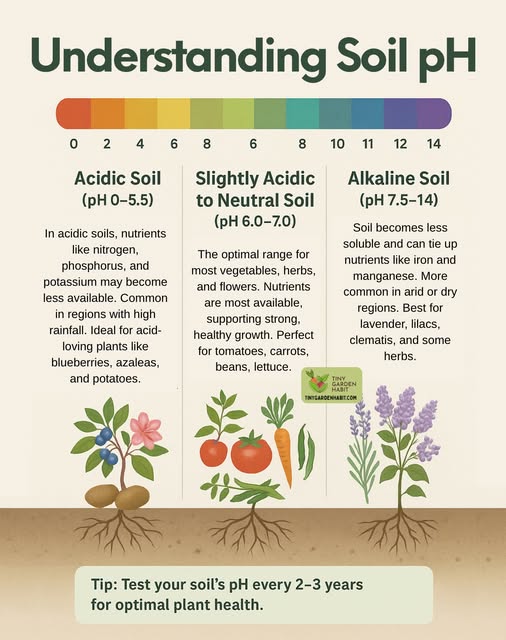
The pH scale in real life is a major factor in global food security. Most plants thrive when the soil pH is close to 7.0, as this is the point where nutrients are most available for absorption.
If the soil is too acidic, farmers often treat it with lime (calcium hydroxide or calcium oxide) to raise the pH. Conversely, if the soil is too alkaline, adding manure or gypsum can help lower the pH by introducing acidic organic matter.
Ocean Acidification: A Global Challenge
Environmental monitoring of the pH scale has revealed a worrying trend in our oceans. As the atmosphere absorbs more CO₂, it reacts with seawater to form carbonic acid, leading to ocean acidification.
Between 1950 and 2020, the average pH of the ocean surface fell from approximately 8.15 to 8.05. While this 0.1 shift may seem small, remember the logarithmic scale: this represents a massive increase in acidity that threatens coral reefs and marine life that depend on calcium carbonate for their shells.
pH in Industry and Everyday Products
The pH scale in real life extends far beyond the laboratory and the human body; it quietly governs the products we use and the systems that sustain us every day.
Swimming Pools Pool water is carefully maintained between pH 7.2 and 7.6, slightly alkaline. If the pH drops too low, the water becomes corrosive and irritates swimmers’ eyes and skin. If it rises too high, chlorine becomes ineffective as a disinfectant, allowing harmful microorganisms to thrive. Pool managers use sodium carbonate to raise pH and hydrochloric acid to lower it.
Food Preservation The food industry relies heavily on pH control to prevent microbial growth and extend shelf life. Vinegar (pH ~2.5) is used in pickling because most harmful bacteria cannot survive in highly acidic environments. Dairy products such as yoghurt and cheese are produced through controlled acidification, where bacterial cultures lower the pH to set the texture and inhibit spoilage organisms.
Shampoos and Skin Care Healthy human skin has a slightly acidic “acid mantle” with a pH of approximately 4.5 to 5.5. A good shampoo is formulated to match this range, preventing damage to the scalp and hair cuticle. Harsh alkaline shampoos (pH above 6.5) can strip natural oils, cause frizz, and damage hair over time, which is why pH-balanced formulations are now a key marketing claim in the personal care industry.
Water Treatment Municipal water treatment plants adjust the pH of drinking water to between 6.5 and 8.5 (as per WHO guidelines) before it reaches our taps. At the correct pH, pipes are protected from corrosion, chlorine disinfection works most effectively, and the water is safe for human consumption.
Nature’s Chemical Warfare: Stings and Nettles
Many plants and animals use the properties of the pH scale for self-defence.
- Bee Stings: A bee injects an acidic liquid (methanoic acid) into the skin. This can be neutralised by applying a mild base, such as baking soda.
- Wasp Stings: In contrast, a wasp sting is generally alkaline; therefore, applying a mild acid like vinegar can provide relief.
- Nettle Plants: The stinging hairs of a nettle plant inject methanoic acid. A traditional remedy is to rub the area with the leaf of a dock plant, which often grows nearby and is basic in nature, neutralising the sting.
pH Scale in Real Life: NCERT Class 10 Quick Reference
For students preparing for their Class 10 Board Examinations, the pH scale in real life is a core concept covered under Chapter 2, Acids, Bases and Salts of the NCERT Science syllabus. The following points summarise the most important real-life applications as per the NCERT framework:
1. pH and Digestion Our stomach produces hydrochloric acid (HCl) and maintains a pH of 1.5 to 3.5 to digest food and destroy pathogens. When excess acid is produced, it causes indigestion treated using mild bases called antacids (e.g., milk of magnesia, baking soda).
2. pH and Tooth Decay Bacteria in the mouth break down sugars to produce acids. When the mouth’s pH falls below 5.5, tooth enamel begins to erode. Toothpastes are mildly basic (pH ~8) to neutralise this acid and protect enamel.
3. pH and Soil Most crops grow best in soil with a pH close to 7. Acidic soil is treated with quicklime (CaO) or slaked lime (Ca(OH)₂). Alkaline soil is treated with organic matter such as manure.
4. pH and Self-Defence in Plants and Animals
- Bee sting: Acidic (methanoic acid) → treated with baking soda (basic)
- Wasp sting: Alkaline → treated with vinegar (acidic)
- Nettle sting: Methanoic acid → rubbed with dock leaf (basic)
5. pH and Rain Water Normal rain has a pH of approximately 5.6 due to dissolved CO₂ forming carbonic acid. Acid rain has a pH below 5.6 due to dissolved SO₂ and NO₂ from industrial pollution.
💡 Exam Tip: In your Board exam, remember “Bee sting = acid = treat with base” and “Wasp sting = alkaline = treat with acid.” These are frequently asked one-mark questions.
Measuring the pH Scale in Real Life
To understand the pH scale in real life, you don’t always need an expensive electronic meter. You can use:
- pH Test Paper: Litmus paper turns red in acids and blue in bases.
- Universal Indicators: These provide a full spectrum of colour changes, from red (strong acid) to purple (strong base).
- Natural Indicators: You can even make a primitive pH indicator at home by boiling red cabbage; the anthocyanin pigments in the juice will change colour based on the pH of the substance you add to it.
Want to know more about the difference between a strong acid and a weak one? Check out our Complete Guide to Strong vs Weak Acids.
Conclusion
The pH scale in real life is far more than just a set of numbers on a chart; it is a vital metric that ensures our bodies function, our crops grow, and our ecosystems remain stable.
By understanding how everyday substances like coffee, blood, and lemon juice interact on this scale, we can make better decisions for our health and gain a deeper appreciation for the chemical balance that sustains life on Earth.
Are you ready to dive deeper into chemistry? Explore our next cluster post on Acids vs Bases vs Salts to learn how these substances react to form the world around us!
Frequently Asked Questions
-
Why does drinking black coffee often cause heartburn?
Answer: Black coffee has a pH of approximately 5.0, making it weakly acidic. This acidity can trigger the lower oesophageal sphincter to relax or stimulate the stomach to produce more gastric acid ($HCl$), leading to the uncomfortable burning sensation known as heartburn or acid reflux.
-
Which household substance has a pH of 14?
Answer: Liquid drain cleaners are among the most basic household substances, often reaching a pH of 14.0. They contain high concentrations of sodium hydroxide (NaOH), which is powerful enough to dissolve organic clogs like hair and grease.
-
Is it true that milk is alkaline?
Answer: Contrary to popular belief, milk is not alkaline; it is slightly acidic. With a pH range of 6.5 to 6.8, milk is very close to neutral but still falls on the acidic side of the scale. However, it can sometimes act as a temporary buffer for stomach acid due to its protein and calcium content.
-
What is the most acidic substance in the human body?
Answer: Gastric juice (stomach acid) is the most acidic substance in the body, with a pH typically between 1.5 and 3.5. This high acidity is essential for breaking down complex proteins and protecting the digestive tract from pathogens.
-
Can the pH of soil affect the colour of flowers?
Answer: Yes, certain plants act as natural pH indicators. For example, hydrangeas produce blue flowers in acidic soil (pH below 6) and pink flowers in alkaline soil (pH above 7). This happens because the soil’s pH affects the plant’s ability to absorb aluminium.